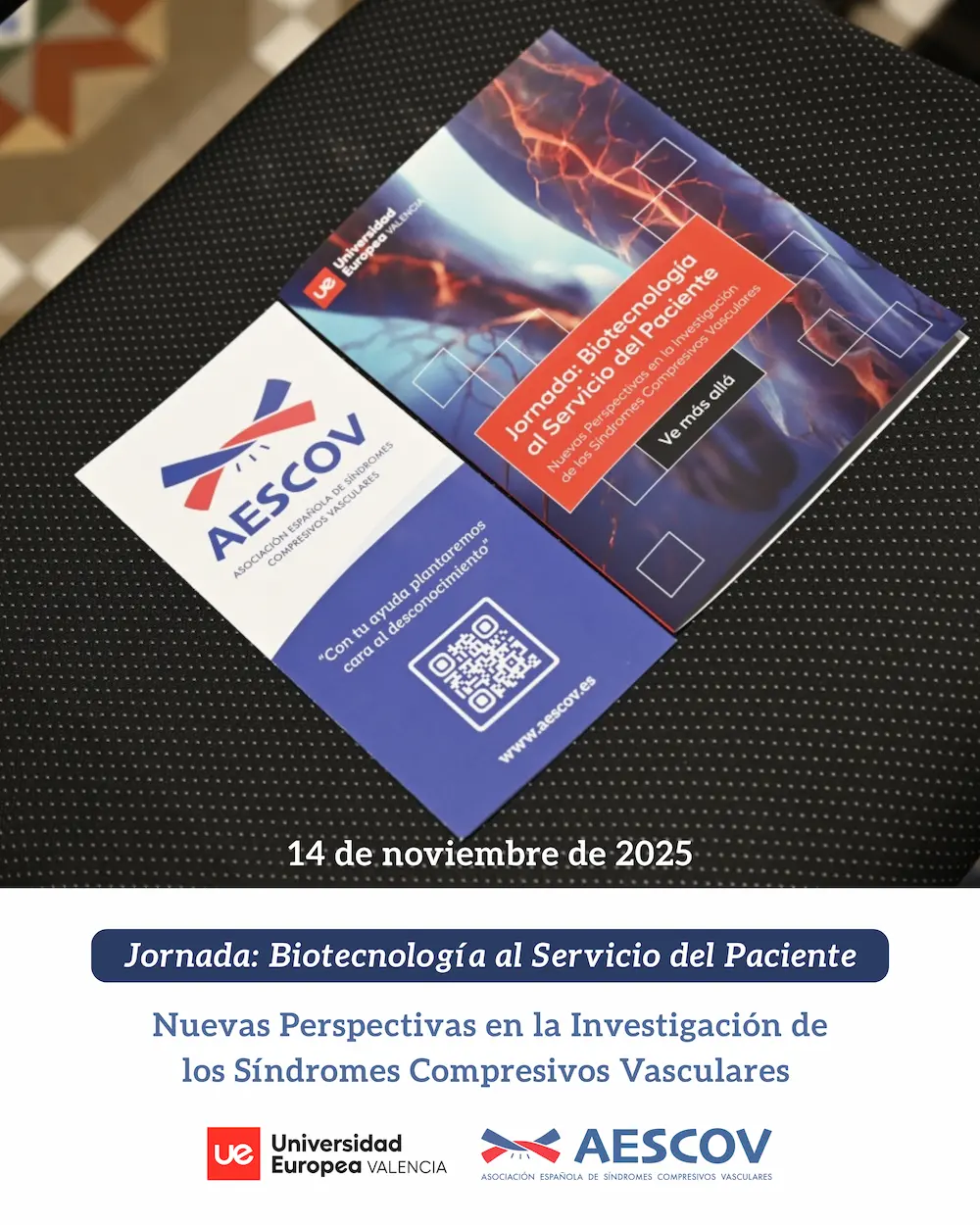
November 14, 2025
Workshop on Vascular Compression Syndromes at the Universidad Europea de Valencia
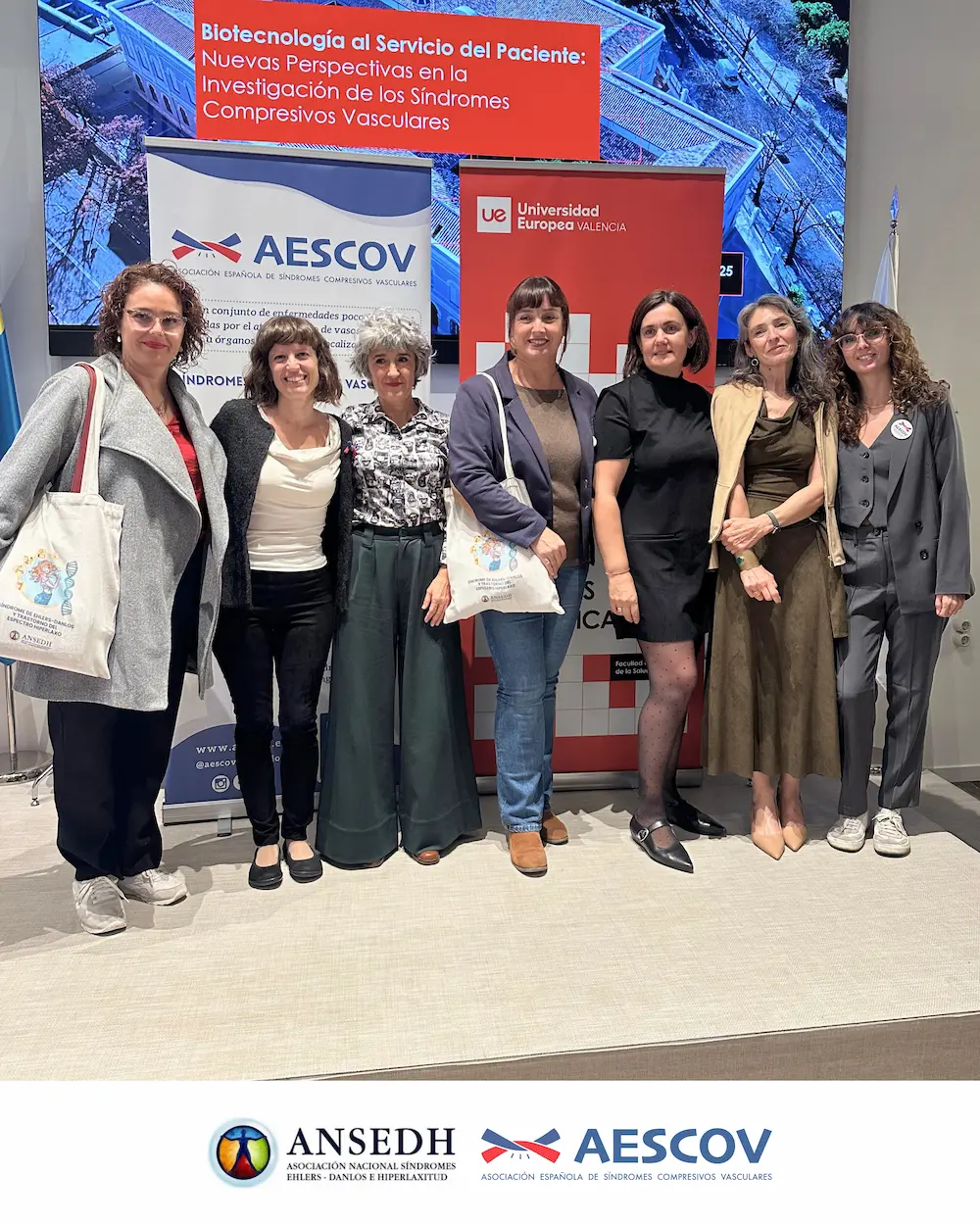
The Universidad Europea de Valencia and the Spanish Association of Vascular Compression Syndromes, AESCOV, jointly held a pioneering workshop: "Biotechnology at the service of the patient: New perspectives in the research of Vascular Compression Syndromes" on November 14th at the university's Turia campus. This project arose from the statistical study called Vascular Compression Syndromes and their Correlation with Ehlers-Danlos Syndrome carried out by Dr. Borja Mercado, researcher at UEV.
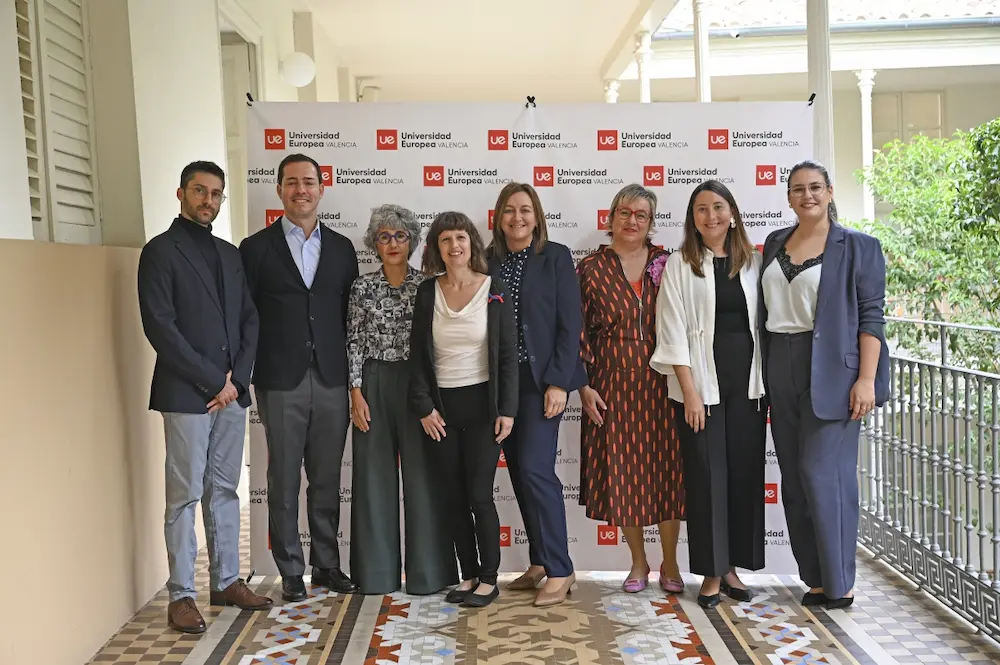
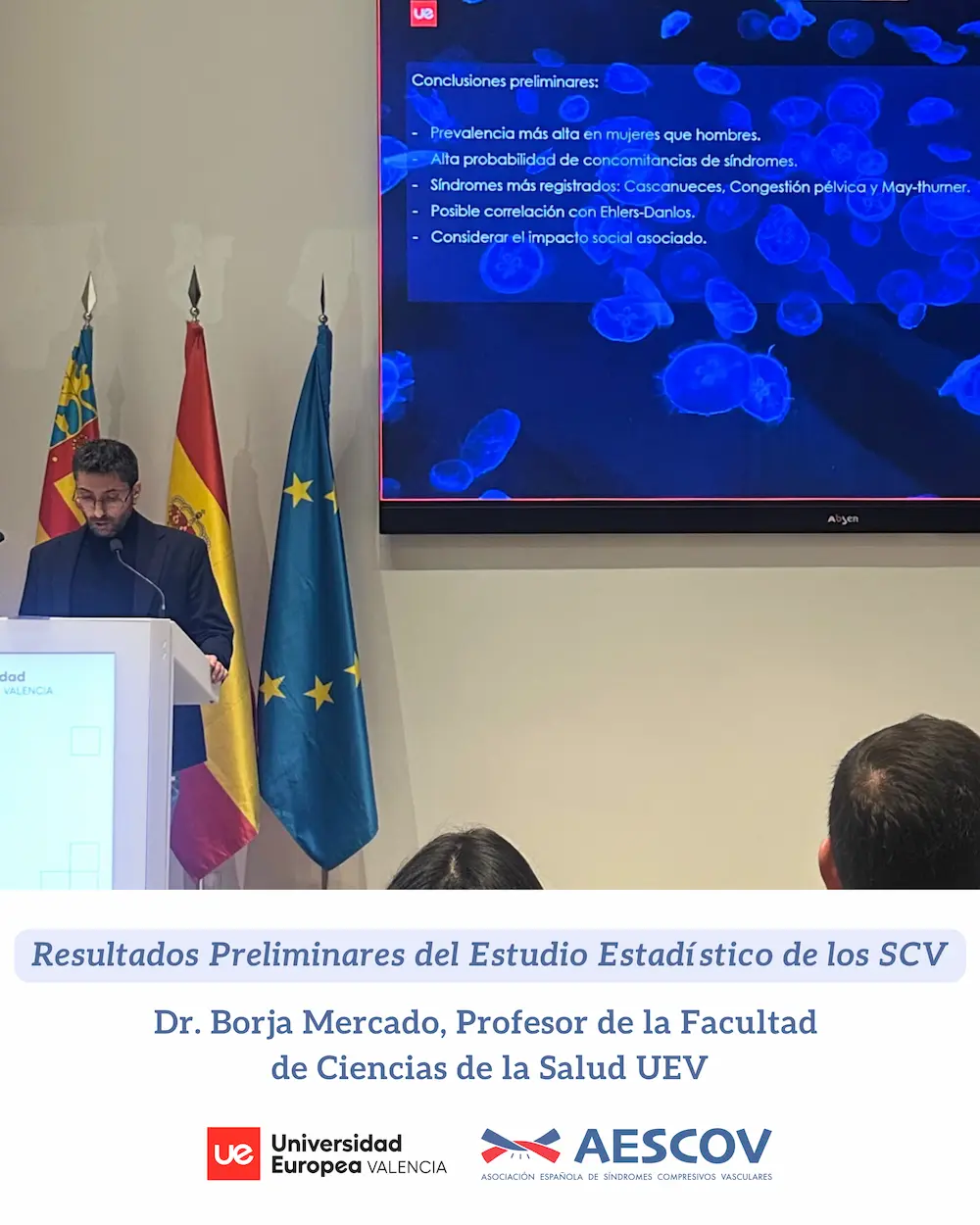
The main preliminary conclusions of this study, as commented by Dr. Borja Mercado, were the following:
- High prevalence of Vascular Compression Syndromes in women.
- High probability of concomitance of Vascular Compression Syndromes in the same patient (more than one syndrome).
- Nutcracker Syndrome, Pelvic Congestion and May-Thurner; the most registered in the study.
- Probable correlation with Ehlers-Danlos Syndrome.
- Importance of the social impact of these pathologies on the patient.
Difficult questions, innovative answers
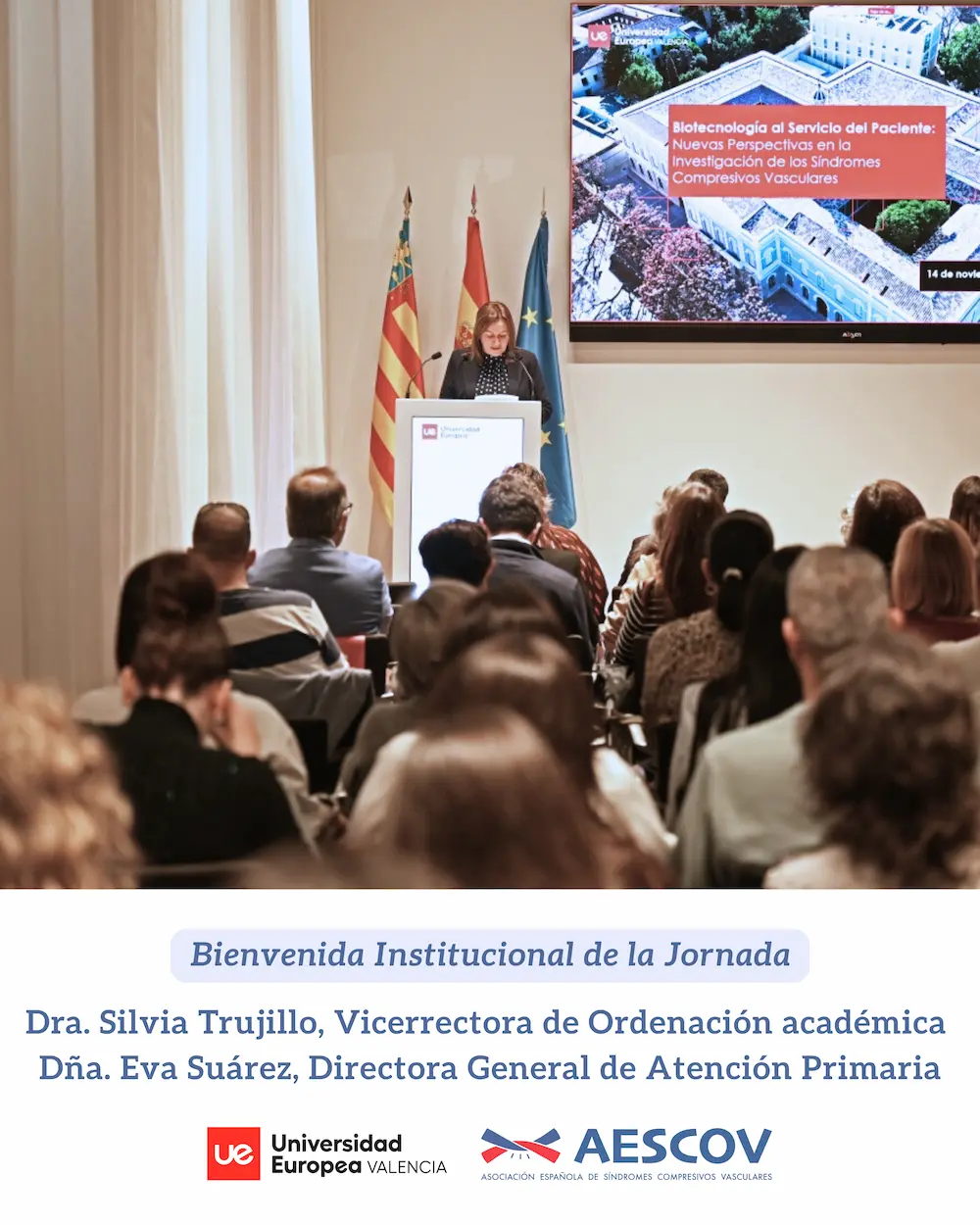
Dr. Silvia Trujillo, vice-rector of UEV, at the opening of the workshop highlighted the role of the Universidad Europea de Valencia "a university that wants to be where difficult questions are generated, where innovative answers are sought, and where bridges are built between science, clinical practice, and society." The opening of the workshop also had the support of Dr. Eva Suárez, Director General of Primary Care.
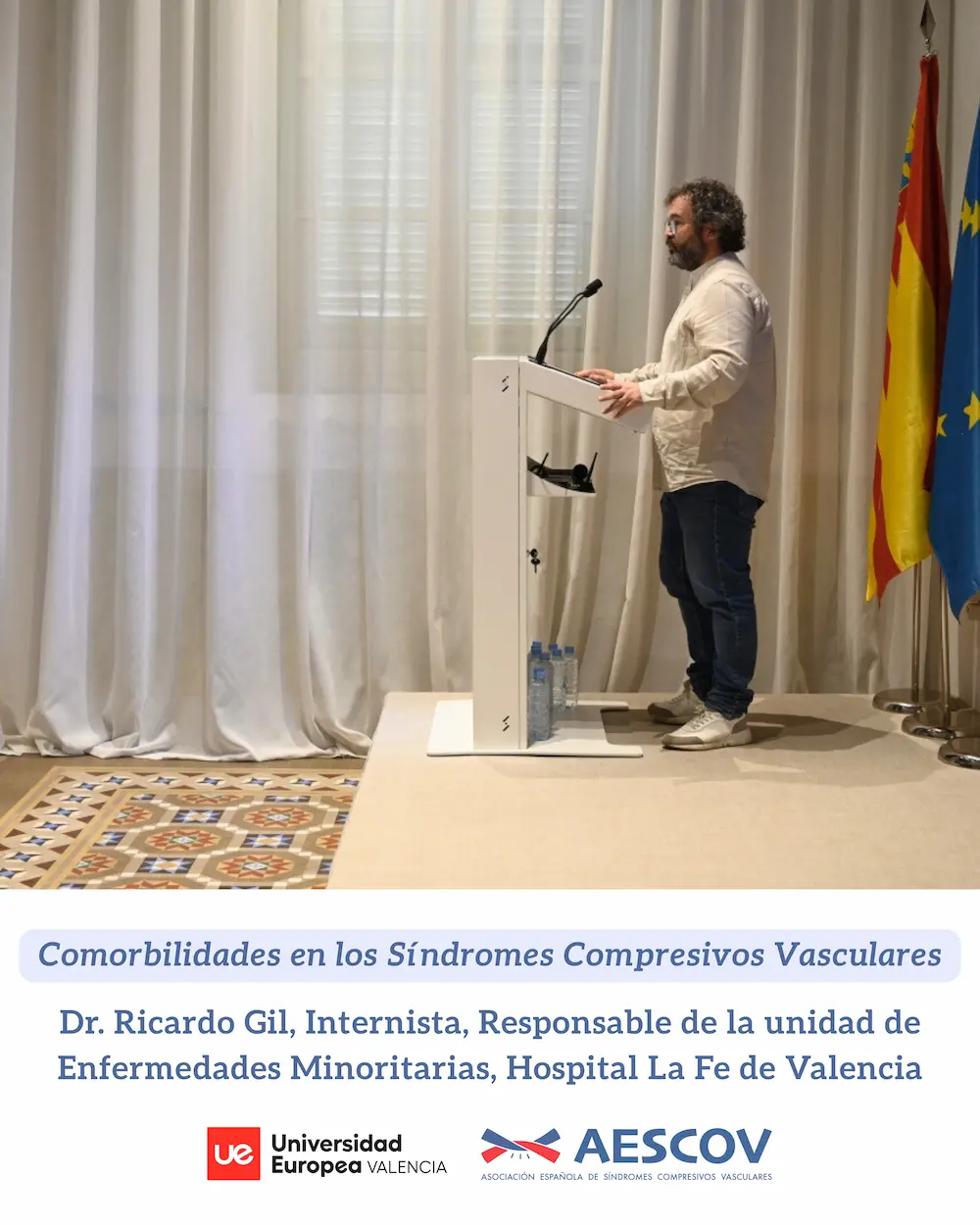
Dr. Ricardo Gil, from the Rare Diseases Unit of Hospital La Fe in Valencia, opened the lecture series with his presentation titled Comorbidities of Vascular Compression Syndromes. This internist described these comorbidities focusing on Ehlers-Danlos Syndrome, Mast Cell Activation Syndrome, and Dysautonomia. The doctor stated that "identifying and making visible the pathologies frequently associated with Vascular Compression Syndromes helps improve the therapeutic approach, follow-up, and quality of life of patients."
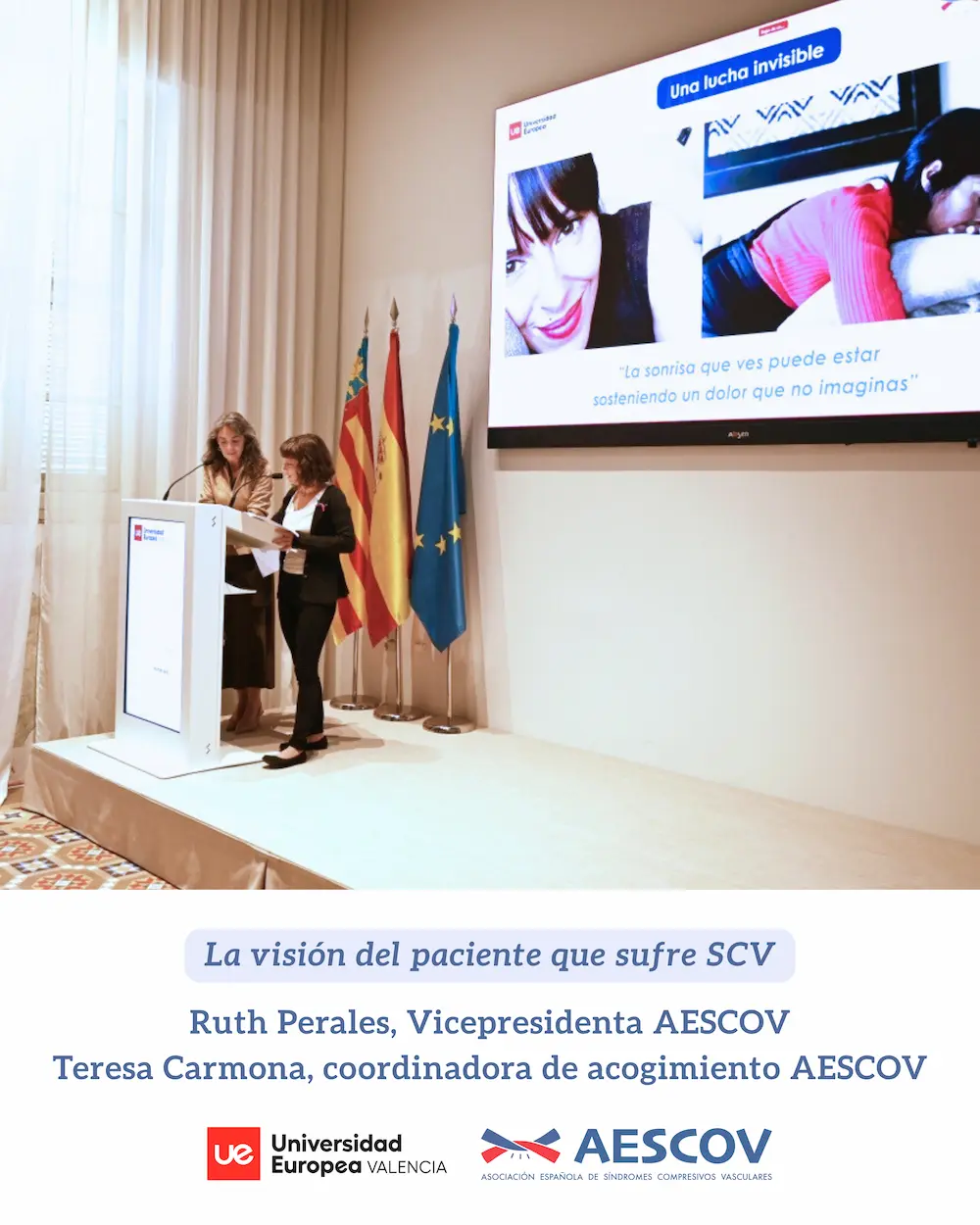
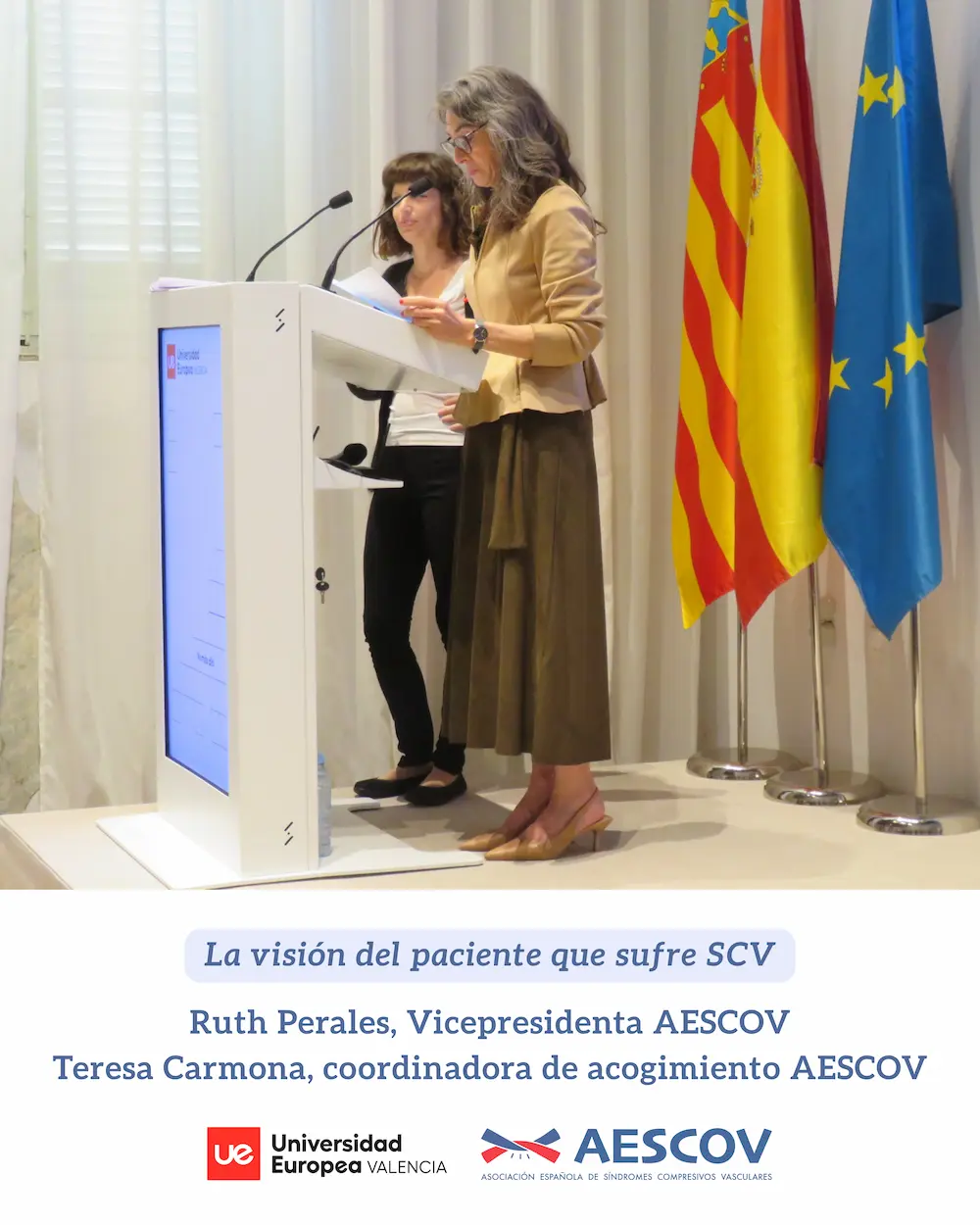
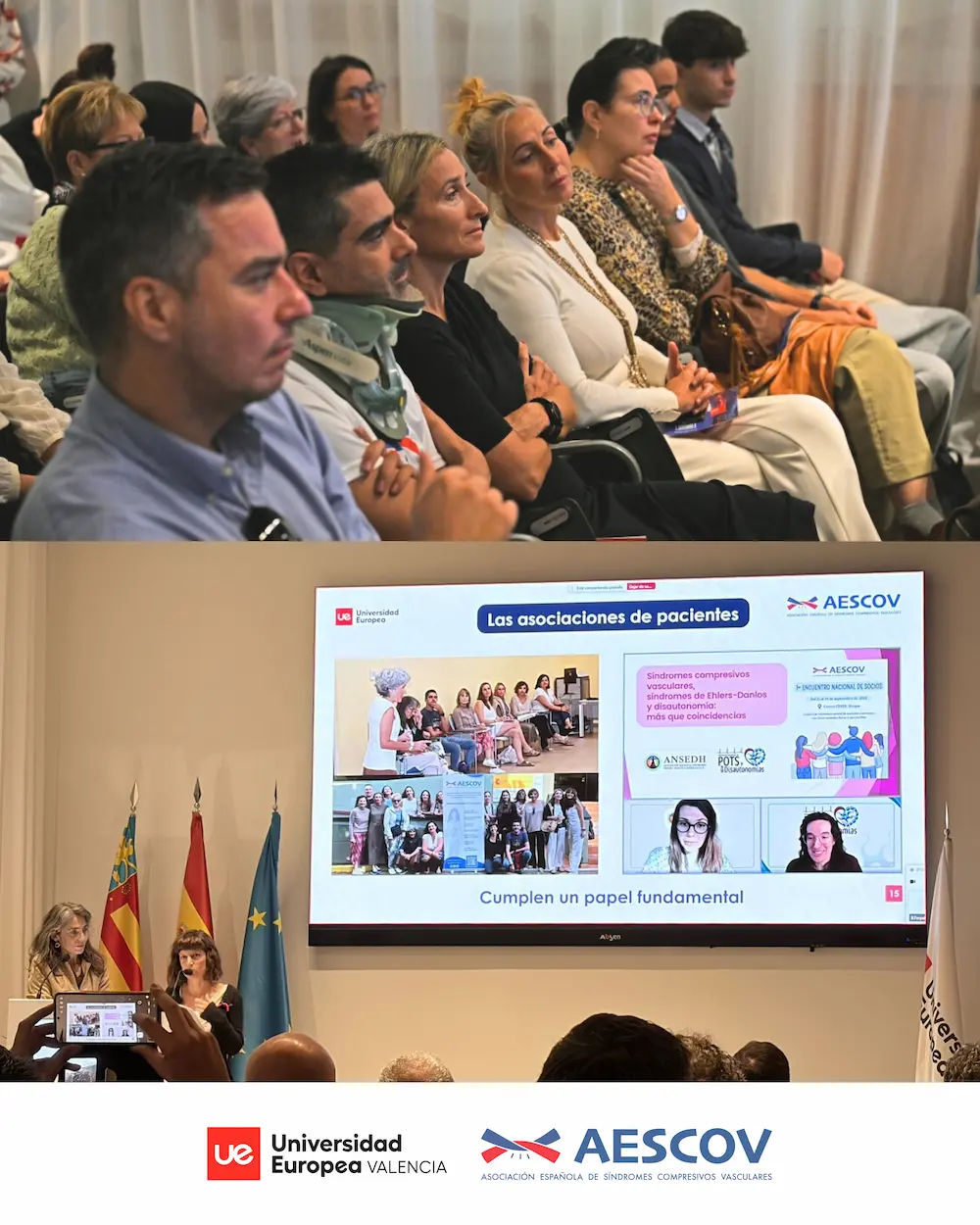
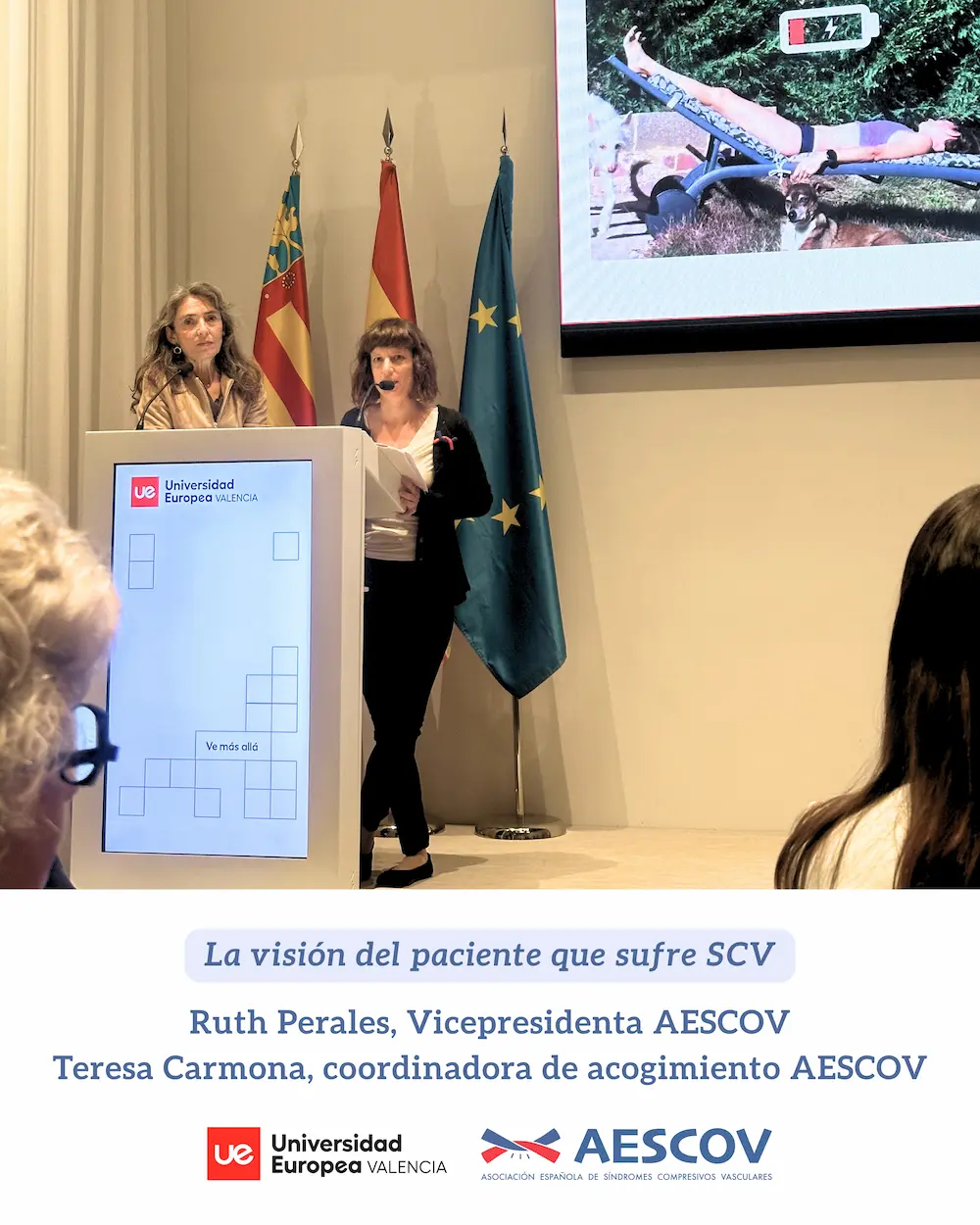
Next, Ruth Pérales and Teresa Carmona, vice-president and reception coordinator of AESCOV, were in charge of recounting the reality of patients with the presentation: The vision of the patient suffering from Vascular Compression Syndromes. Both members and board members of AESCOV described the reality of living with chronic pain and pilgrimage for years until achieving a diagnosis. According to their words, "this is the reality of many patients. Their dreams are cut short, crossed by very disabling symptoms that few know about and that too often no one knows how to treat. Their lives are shaken."
Arguing with evidence
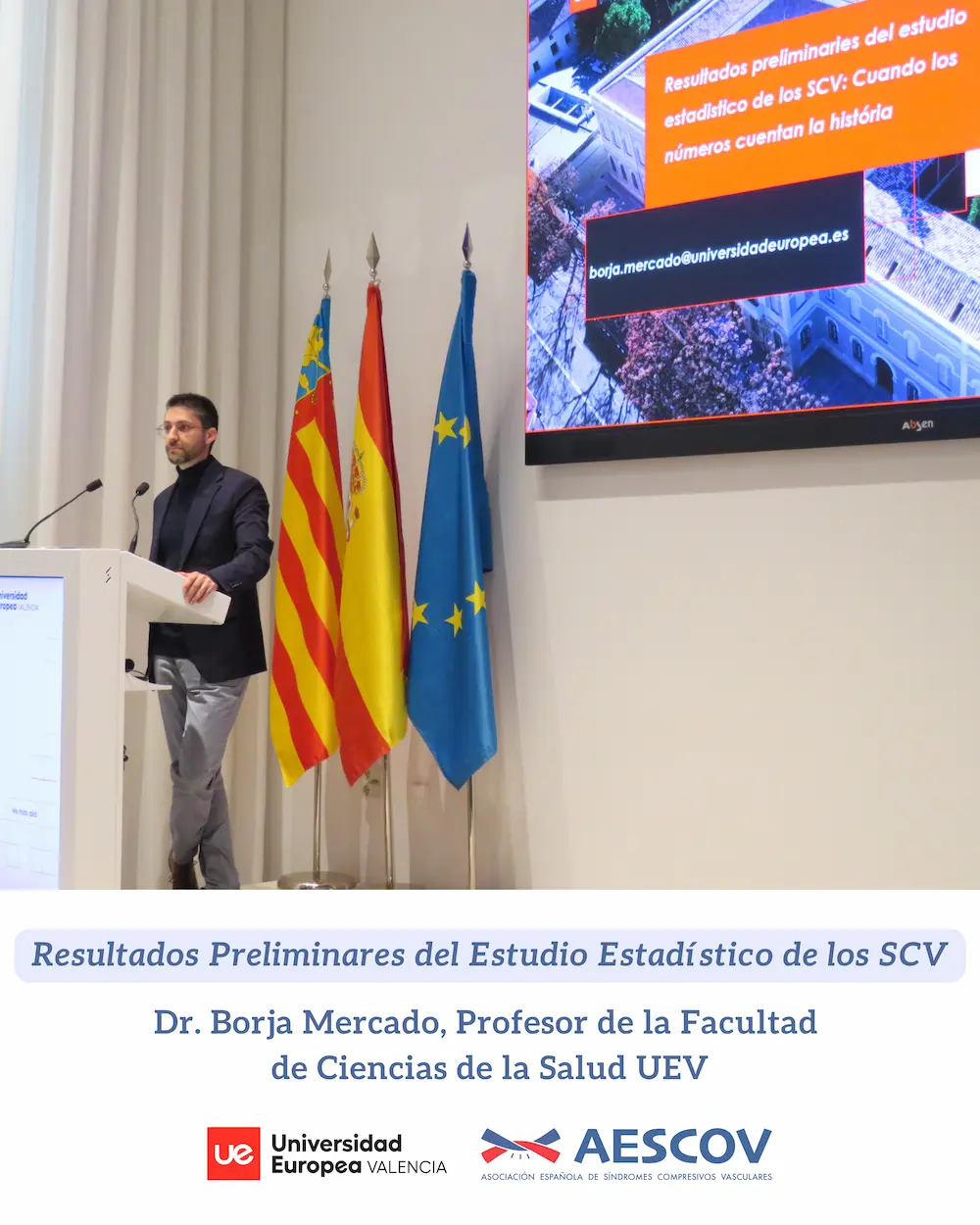
Dr. Borja Mercado, professor and researcher at the Universidad Europea de Valencia, presented the preliminary results of the statistical study developed together with AESCOV, and explained in detail the conclusions derived from this study. Borja Mercado stated that "having quantitative data about the clinical reality of patients allows arguing with evidence, not just with testimonials, before researchers, professionals, and health entities." The researcher clearly presented the data and proposed working together.
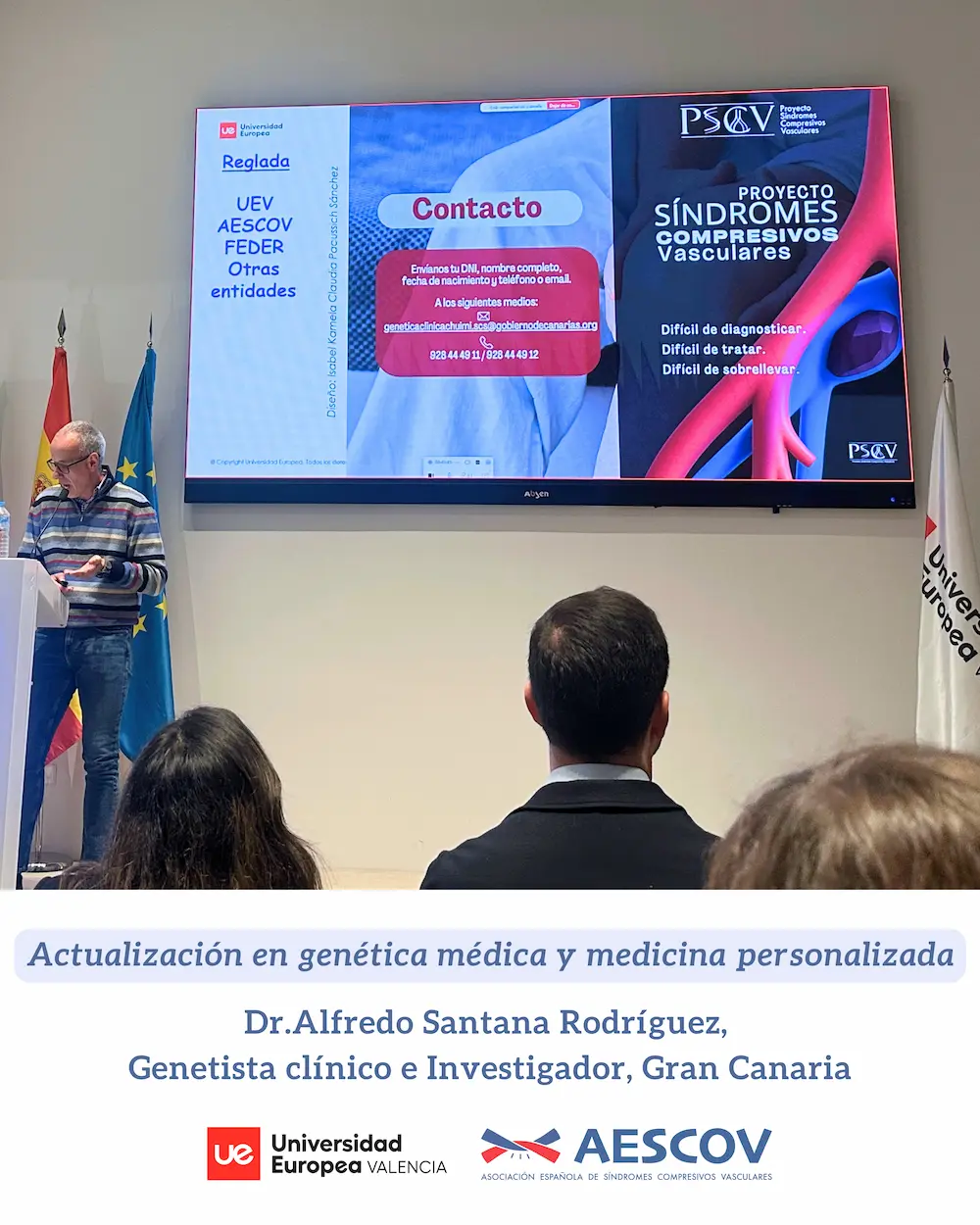
Dr. Alfredo Santana, geneticist and researcher at CHUIMI in Las Palmas de Gran Canaria, presented in his dissertation the advances in medical genetics and personalized medicine. This doctor presented the so-called Vascular Compression Syndromes Project that he is carrying out to find the genetic causes of these pathologies and investigate effective curative or palliative therapies, that is, "to open new lines of research on Vascular Compression Syndromes." The physician presented the brochure about his project, written in Spanish and English, and proposed its maximum dissemination.
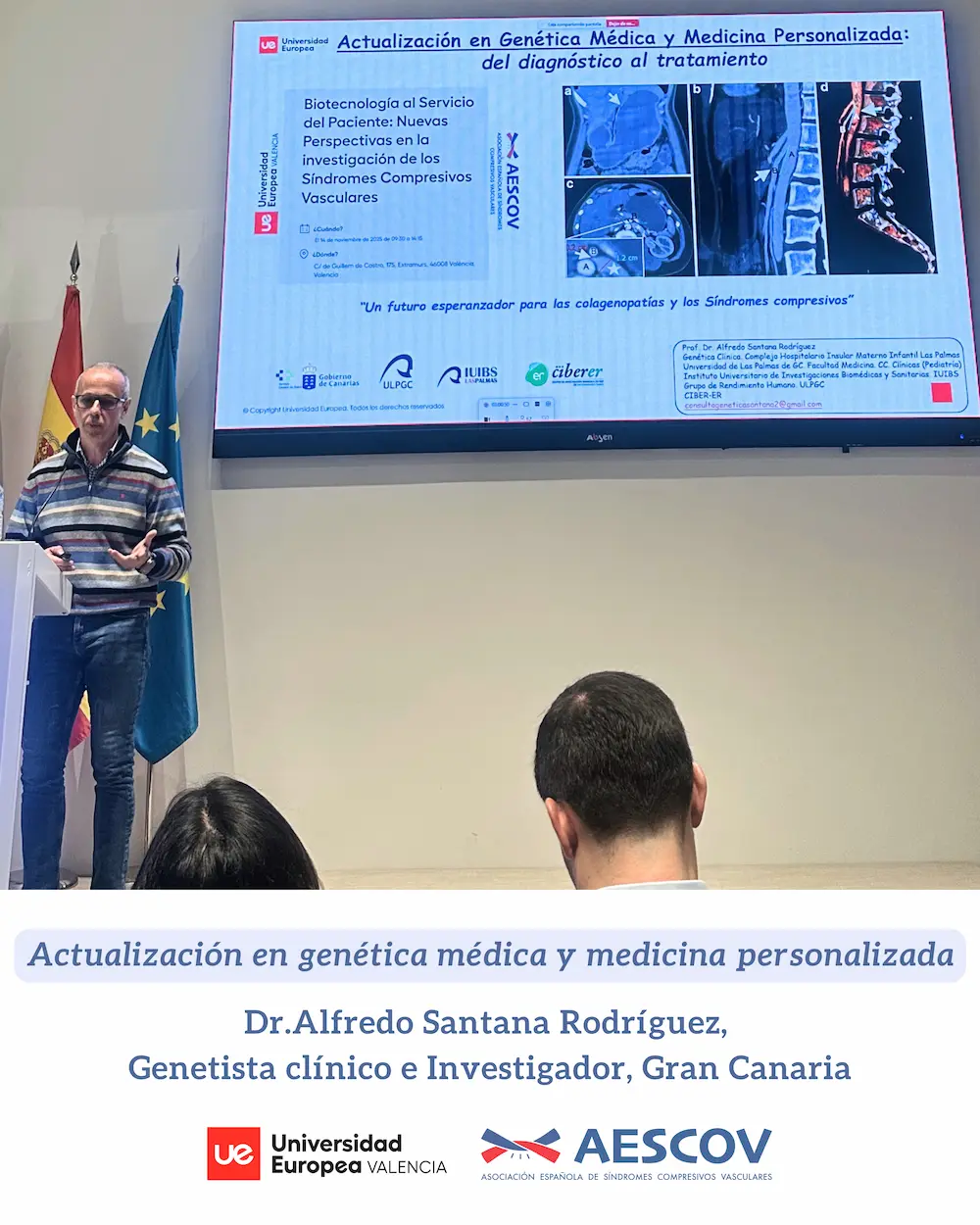
Both Dr. Santana and Dr. Mercado highlighted the scarcity of scientific publications about VCS and the inaccuracy of some of them. Both professionals gave as an example of this inaccuracy the naming of the concomitance of these syndromes as unusual cases. Both emphasized the need to "row together and put on the work overalls" to improve the situation.
Vascular Compression Syndromes in university degrees
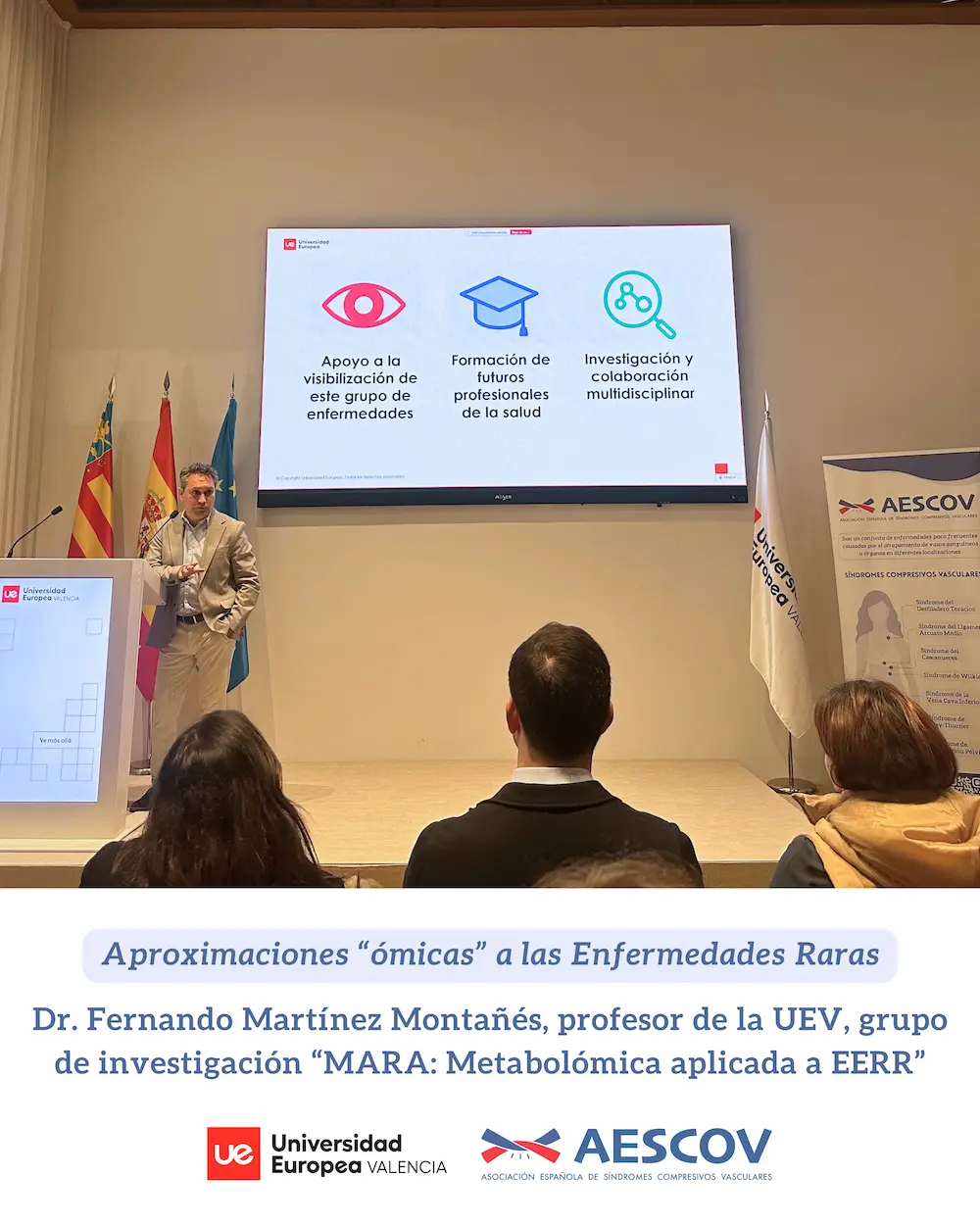
Finally, Dr. Fernando Martínez shared the work lines of the research group "MARA" Metabolomics applied to rare diseases. He also emphasized the commitment of the Universidad Europea de Valencia in the research of these diseases, as well as its support in visibility and training of future professionals, including VCS and Ehlers-Danlos Syndrome in health university degrees.
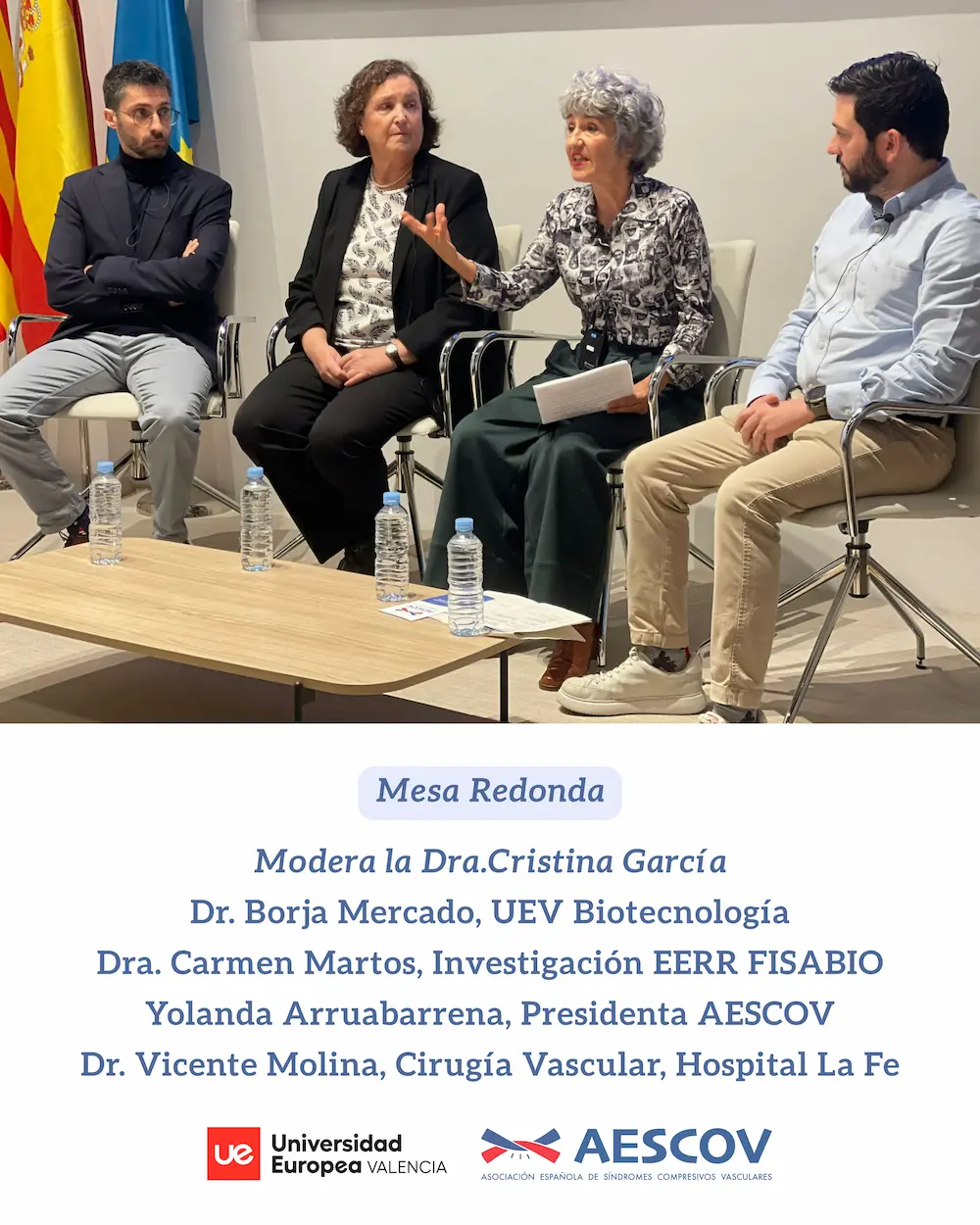
The workshop culminated with a round table, a key space to unite all perspectives, moderated by Dr. Cristina García, coordinator of the Biotechnology Degree at UEV.
Yolanda Arruabarrena, president of AESCOV, conveyed to the audience the needs of patients and concluded with the joint thanks of the Spanish Association of Vascular Compression Syndromes to the attendees and the Universidad Europea de Valencia: "Thank you for giving us a voice and for opening spaces for dialogue and knowledge for pathologies that, in many cases, remain invisible. We need research, SCIENCE in capital letters, to advance in diagnosis, treatment, and quality of life of patients."
At the table, we could also hear the proposals of researchers and health managers from Dr. Carmen Martos, who spoke about Rare Disease Registries, Dr. Borja Mercado, and Dr. Vicente Molina, specialist in Angiology and Vascular Surgery at Hospital La Fe, who emphasized the concomitance of VCS and the need for comprehensive and multidisciplinary care.
Behind each diagnosis
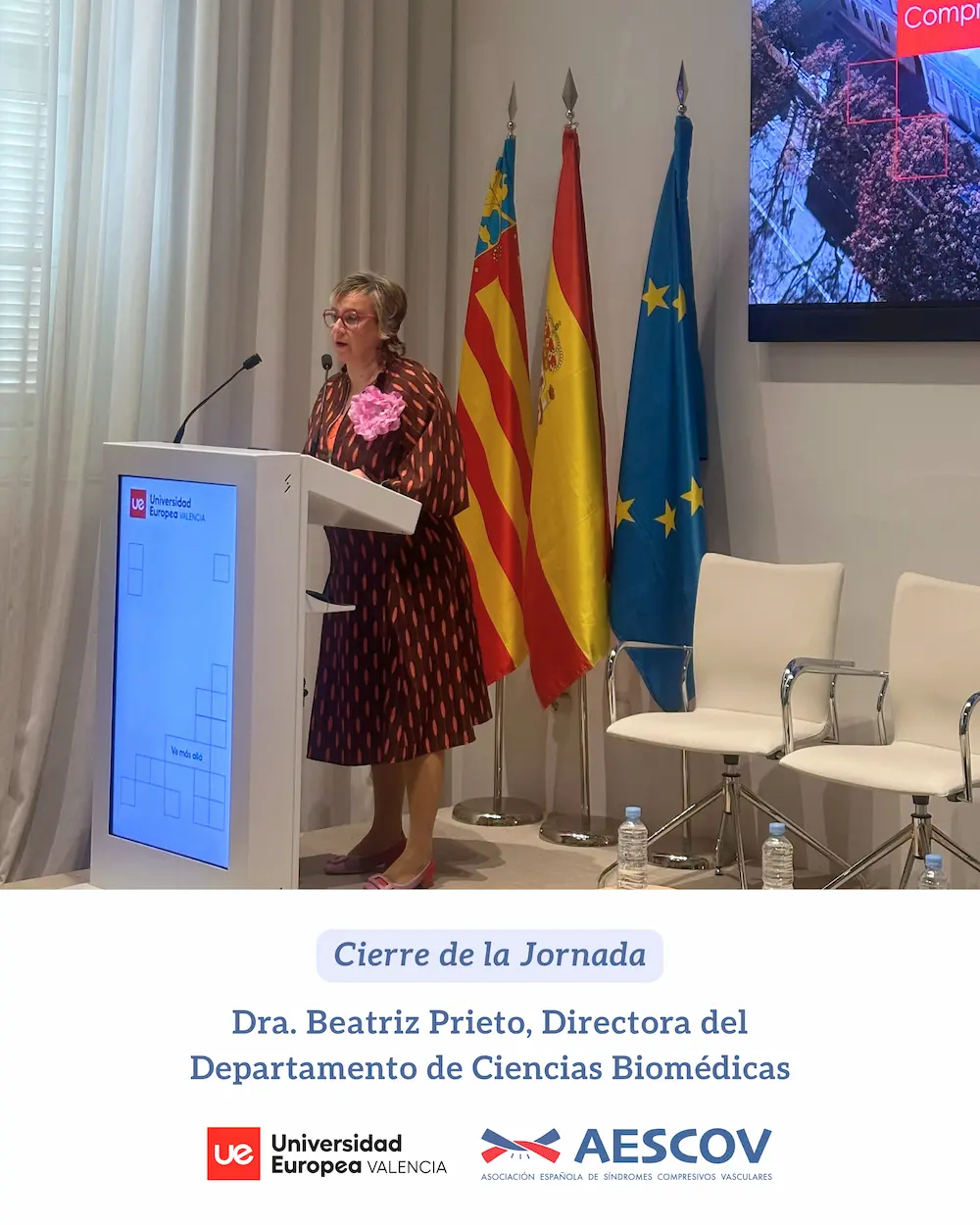
Dr. Beatriz Prieto, director of the Department of Biomedical Sciences at UEV, closed the event. The doctor emphasized that "Vascular Compression Syndromes demand an interdisciplinary, human, and committed perspective. We have heard diverse voices, from research to clinical practice, and, above all, we have remembered that behind each diagnosis there is a person, a story, a need to be understood."
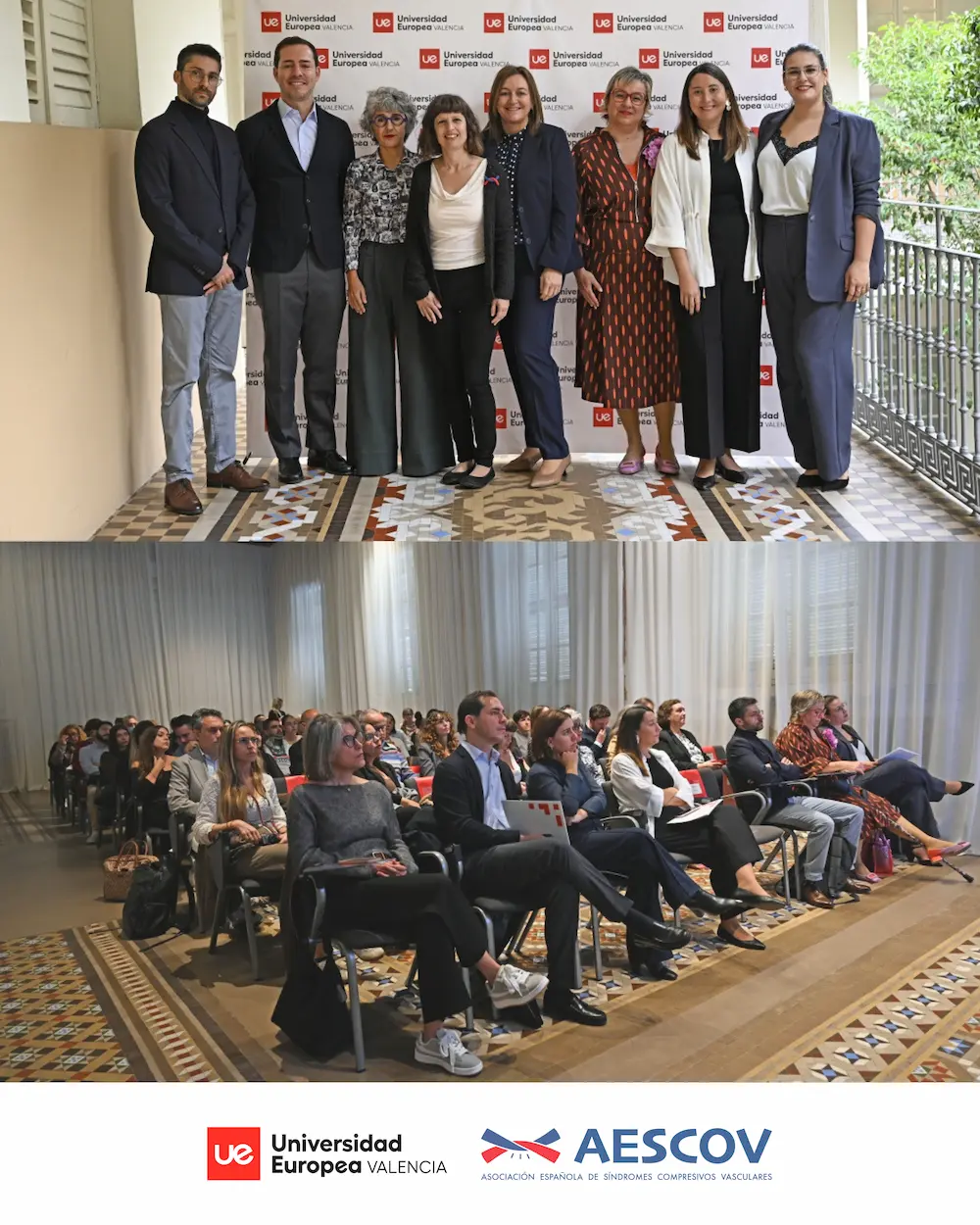
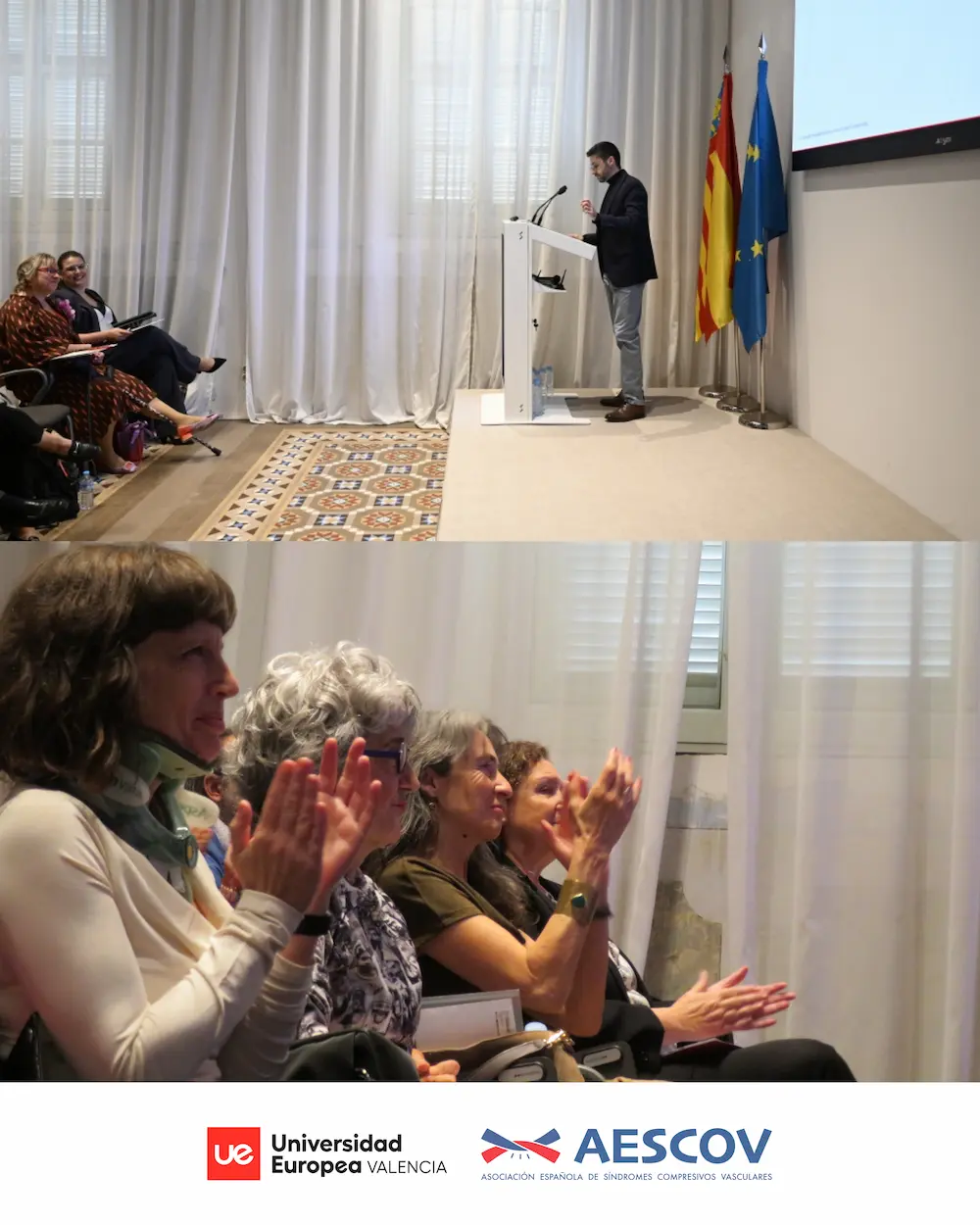
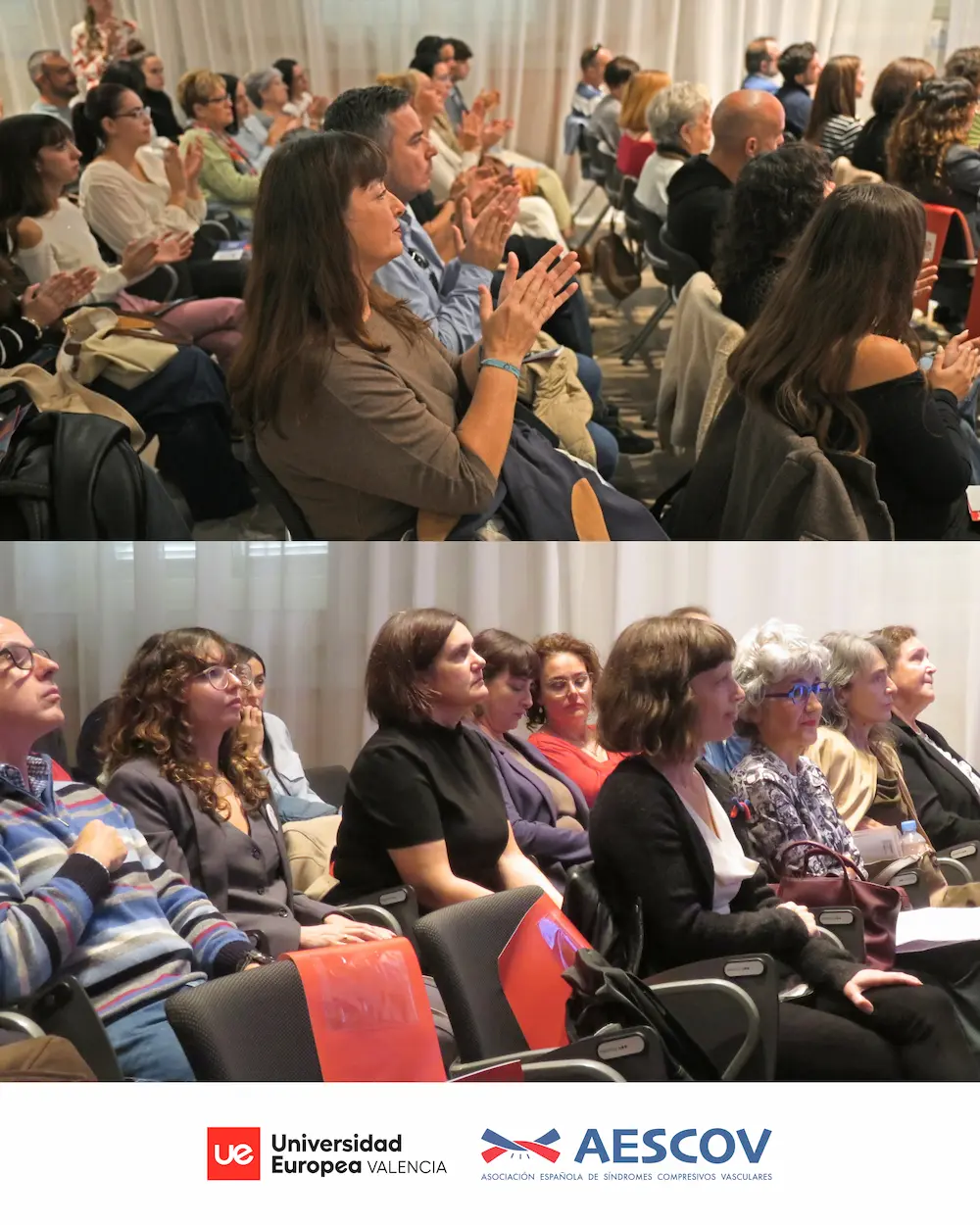
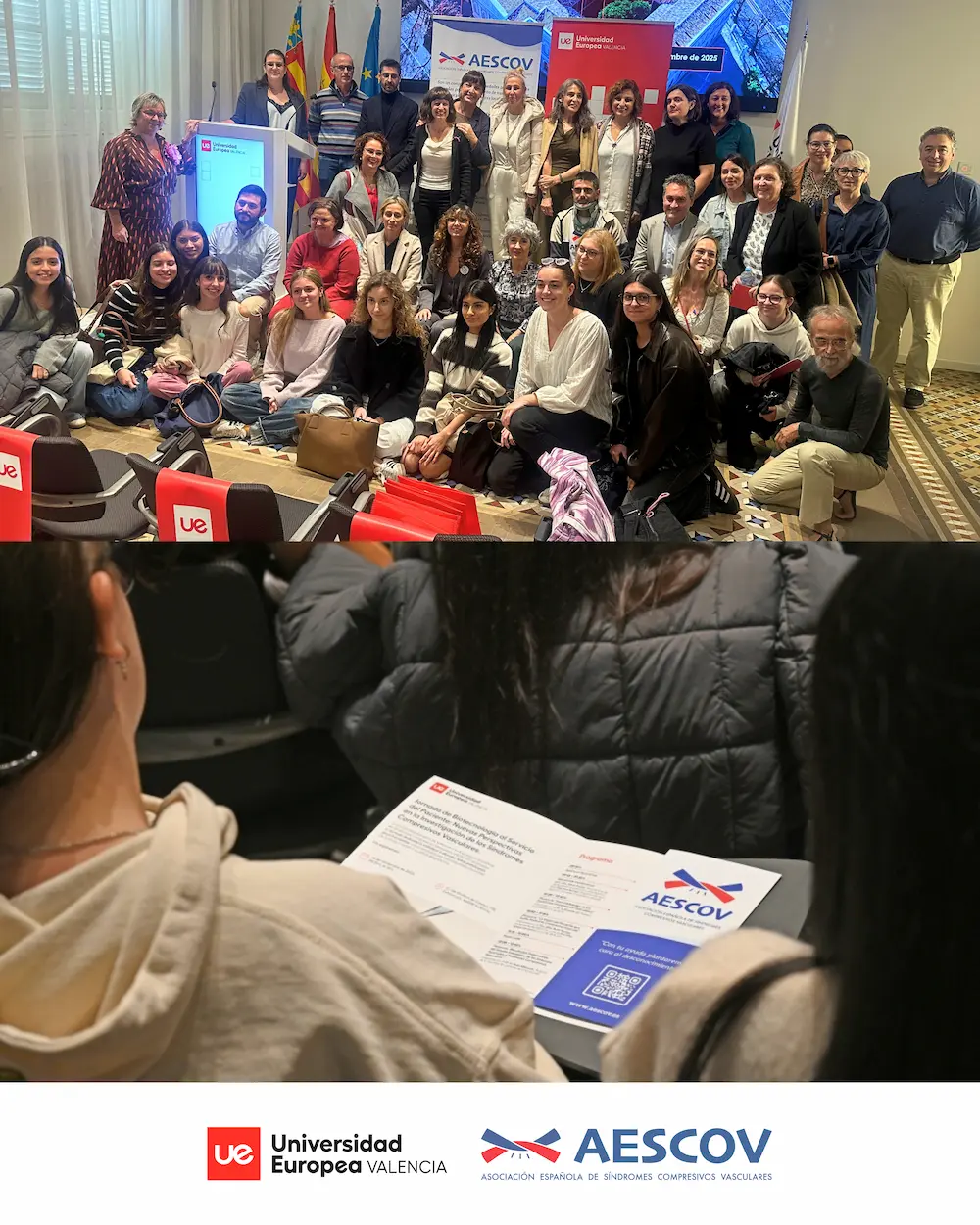
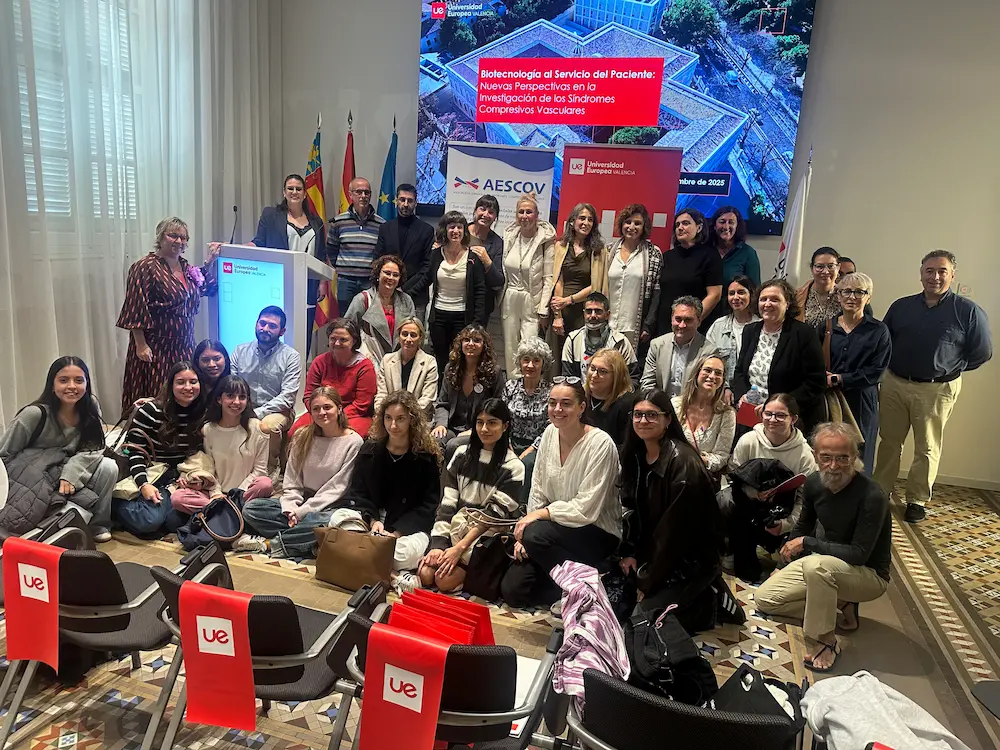
The workshop was also attended by numerous patients with Vascular Compression Syndromes among the attendees and university students who contributed to the meeting with very interesting questions. The workshop ended with the exchange of experiences about the needs of affected people, the challenges presented by these syndromes, and ongoing research projects.
Access the Workshop content from our Instagram account:
Instagram Post 1 | Instagram Post 2
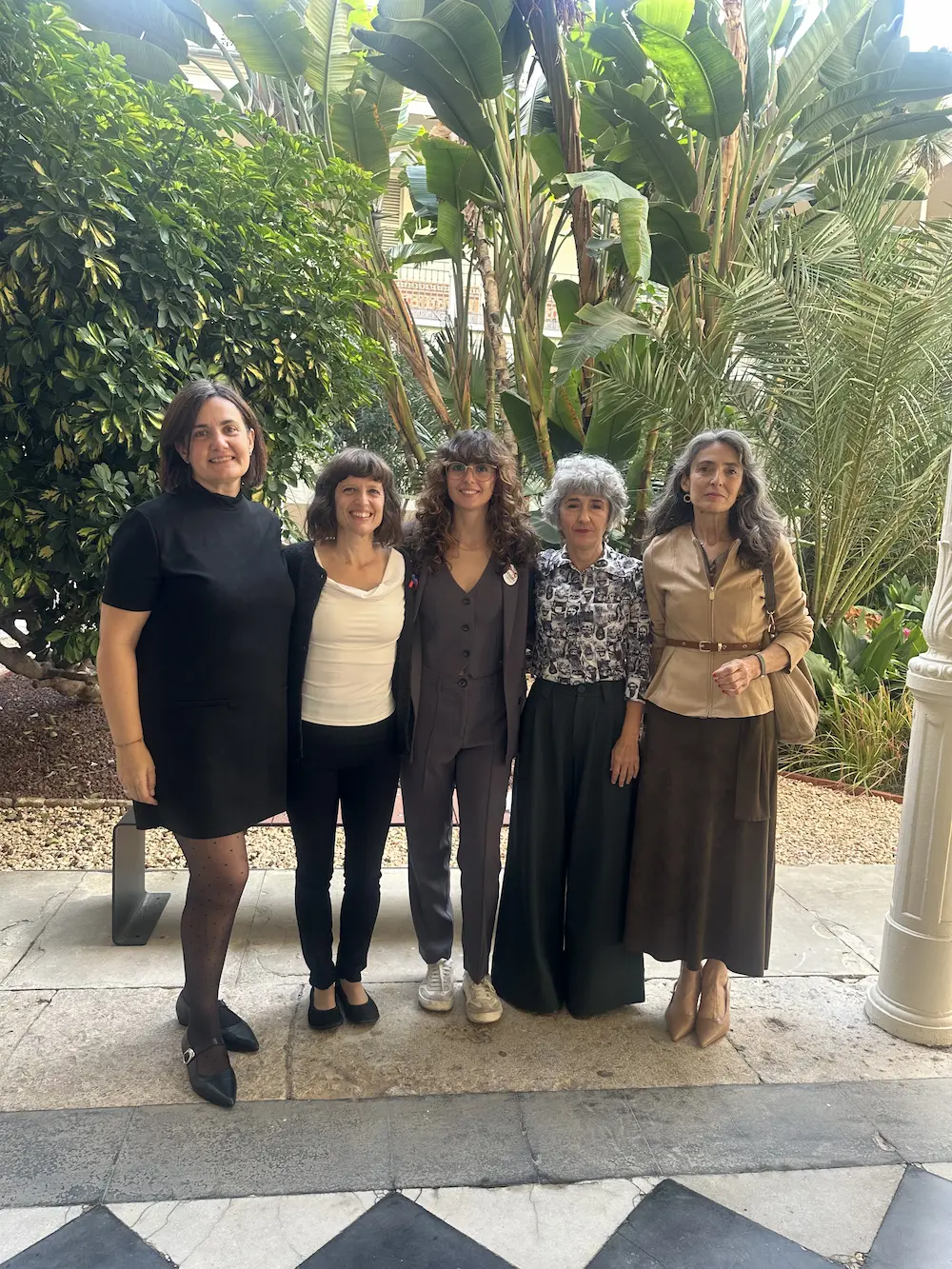
Thanks to those who made this workshop on VCS a reality, with patients at the center. Thanks to those who are driving research, training, and building bridges towards better care for these rare diseases.
Activities
- Opening – Dr. Silvia Trujillo (Vice-Rector UEV) and Dr. Eva Suárez (Director General of Primary Care)
- Comorbidities of Vascular Compression Syndromes – Dr. Ricardo Gil (Rare Diseases Unit, Hospital La Fe de Valencia)
- The vision of the patient suffering from Vascular Compression Syndromes – Ruth Pérales and Teresa Carmona (AESCOV)
- Preliminary results of the statistical study VCS and correlation with EDS – Dr. Borja Mercado (Researcher UEV)
- Advances in medical genetics and personalized medicine. VCS Project – Dr. Alfredo Santana (Geneticist, CHUIMI Las Palmas de Gran Canaria)
- Work lines of the MARA research group: Metabolomics applied to rare diseases – Dr. Fernando Martínez (UEV)
- Round table – Moderated by Dr. Cristina García (Coordinator Biotechnology Degree UEV). Participants: Yolanda Arruabarrena (President AESCOV), Dr. Carmen Martos, Dr. Borja Mercado, Dr. Vicente Molina
- Closing – Dr. Beatriz Prieto (Director of the Department of Biomedical Sciences UEV)
Thanks to those who made this workshop on VCS a reality, with patients at the center. Thanks to those who are driving research, training, and building bridges towards better care for these rare diseases.
Gallery(19 photos)